 Helpful Neurons

Helpful connections
Helpful Neurons – Helpful connections in life: in your own mind, in your family, with your friends, on the phone
Helpful connections exist in three places: in one’s own mind, with people nearby and on the phone or in a chat.
Often the turn bubbles up from a completely unexpected source.
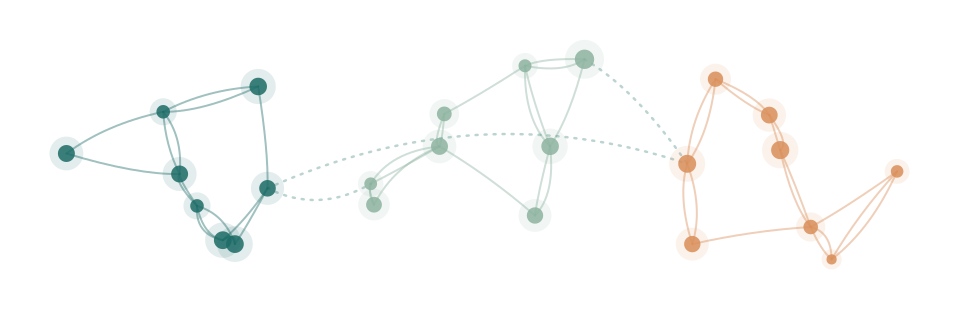
Which connections help in your own mind?
Which sentence do I tell myself instead of “I can’t”?
The name Helpful Neurons can be read as an image. Nerve cells can form new connections. A thought you repeat often is like a trail in a meadow.
Words are keys that unlock images, emotions and memories. Try it today: when you think “I can’t”, say quietly “I can try”. Write the sentence on a note and stick it on the fridge.
What research says about such changes can be found on the science page.
Which connections help in your family and with your friends?
Whom do I call today?
Write down three names, for example your sister, a colleague, your neighbor. Add a crisis line. If a lot or everything seems too hard right now, call someone you trust now, talk to a person close to you or call a crisis line.

Psychache, deep emotional pain, is linked to unmet needs, for example for love, belonging or purpose. The list below names one step for today for each need.
Tell a person you trust what you are thinking and feeling right now. Ask them: “What do you see that I can’t see right now?”
What do I need most right now?
- Love and belonging – Send one person a short message today.
- Autonomy – Decide for yourself what you eat today or when you go for a walk.
- Competence – Write down one thing that went well today.
- Safety – Spend time with people you feel safe with, and keep fixed times, for example for breakfast.
- Purpose – Ask yourself: for whom or for what do I get up tomorrow?
Go to one meeting this week, for example at a club, a choir, a congregation or a volunteer group. Faith is one of these offers, open to anyone who wishes.
Which connections help on the phone and on the internet?
Where do I write when speaking is too hard?
Many crisis lines are reachable by text or chat too. The 988 Suicide & Crisis Lifeline in the USA offers call, text and chat. In New Zealand, call or text 1737. More services are listed under Crisis hotlines worldwide.
Which small steps toward other people do I take this week?
Every person has the right, first and foremost, to be heard and seen – without any attempt to cheer them up or to offer a solution.
Answer with warmth and without pressure, and work with me constructively. I want more helpful connections in my life – in my own mind, in my family, with friends and on the phone. First ask me a few short questions about my situation. Then show me small first steps for each of these areas. Name sources and studies for your statements.
strengthen social connections first steps
The buttons open services of other providers. Only the text of the prompt or the search goes there, and only with your click. Some services can ask you to sign in, and costs can apply. After signing in, it can be necessary to paste the text again. Answers from an AI can contain errors.
Who helps me when I am alone with my worries?
Every person has the right, first and foremost, to be heard and seen – without any attempt to cheer them up or to offer a solution.
Answer with warmth and without pressure, and work with me constructively. Right now I am carrying a heavy load and I feel alone with it. First ask me what I am carrying. Which connections to other people have helped people in such situations? Name scientific studies on connectedness and social support.
social support studies loneliness
The buttons open services of other providers. Only the text of the prompt or the search goes there, and only with your click. Some services can ask you to sign in, and costs can apply. After signing in, it can be necessary to paste the text again. Answers from an AI can contain errors.